ZedePool Comics
Whatnot is where the sales happen, but a Whatnot profile makes a poor front door. This page gives the shop a name in search, a logo, and one thing to do.

The problem
ZedePool Comics sells comic books live on Whatnot. Key issues, graded slabs, raw books, auction steals.
Whatnot is where the sales happen, but it is a poor front door. The platform does not index seller pages well. The profile has no meta description and no structured data. A search for the shop’s name did not reliably bring it up.
That matters because a comic seller’s audience finds them by name. Somebody catches a stream, sees a table at a con, or is handed a business card. Then they Google it. With no page of its own, that search dead-ends.
The seller needed something to put on a card, a stream overlay and a social bio, that would also stand in for the Whatnot profile in search results.
One page, one action
Everything on the site points at Follow on Whatnot. The button is in the hero, again after a short explainer for people new to the platform, and once more at the end. There is no contact form and no newsletter, because nothing should compete with the follow.
The explainer is a three-step New to Whatnot section: get the app, follow, bid. Most people who find the seller from outside have never used it, and three steps is what it takes to clear that out of the way.
Owning the name in search
The page carries every signal the Whatnot profile lacks. Organization structured data with a sameAs link to the profile. A canonical URL. A full Open Graph set with a 640 by 640 logo image. A real title and meta description. A robots.txt with a sitemap. A theme color. Vercel adds a two-year HSTS header with preload.
None of this is exotic. It is the list of things a platform profile cannot do for a seller, written down and done.
Comic book design language
Bangers display type over Inter. A navy, electric blue and yellow palette. Hard offset print shadows on the cards and buttons, and a halftone texture that drifts slowly.
Starburst callouts reading POW, MINT, LIVE and SOLD pop in and then bob. Panels slam in on scroll with an overshoot ease. All of the motion switches off for anyone whose device asks for less of it.
The logo
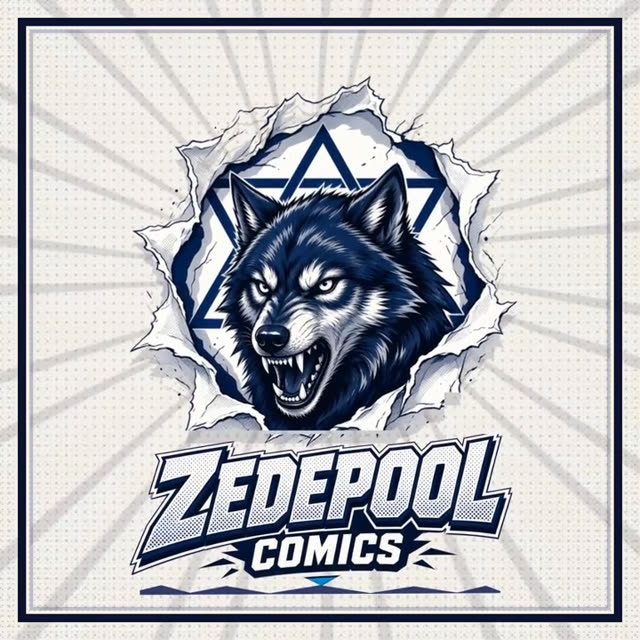
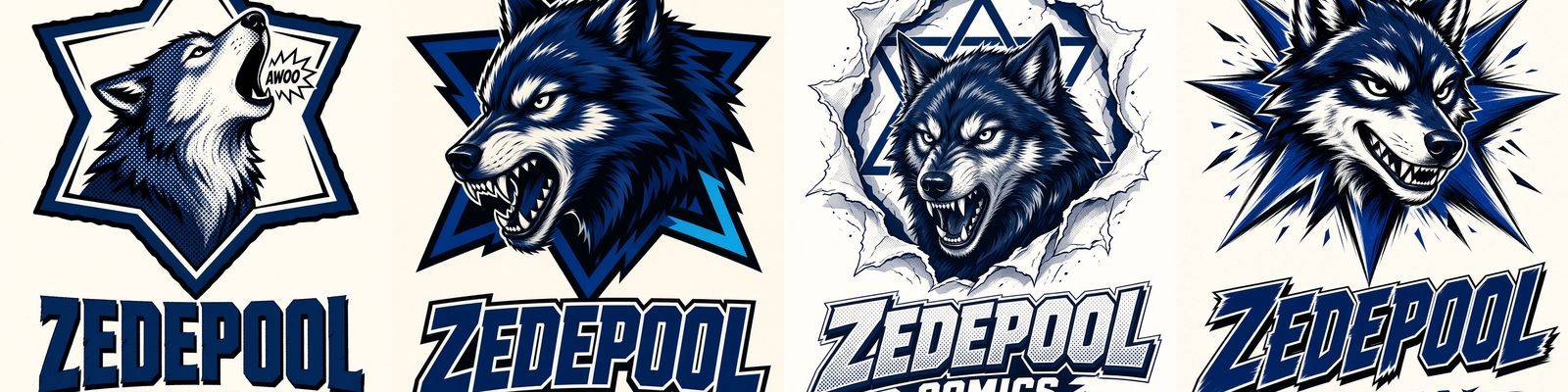
I designed the ZedePool wolf. Four ideas went on the table: a howling wolf in a star badge, a snarling wolf on a shield, a wolf bursting through a torn comic panel, and a wolf in a jagged starburst.
The torn panel won. It still reads at favicon size, and it tells the story of a live auction breaking through the page. The same mark ships as the hero art, the social preview, the touch icon and the favicon.
Then I animated it as a short sting. On the live site it plays once, muted, in the hero, with the still logo as its poster. Tap it and it plays again. Anyone with reduced motion turned on gets the still and never loads the clip.
Keeping it small
No framework, no build step, no third-party CSS. Two self-hosted fonts, cut down to Latin. The HTML is 23 KB. The fonts are 24 KB and 48 KB.
The largest thing on the page is the logo sting, and it is the only asset allowed to preload, because it is the hero.
Where it landed
Live at zedepoolcomics.vercel.app, delivered on 2 September 2026.
The shop now has a page that carries its name, logo, description and a direct Whatnot link into search results and link previews. The Whatnot profile could not do that on its own. Every visitor gets one next step, on a page that loads in one round trip.
There are no traffic or ranking numbers yet. The page is a day old.
The shape is reusable. One page, structured data plus Open Graph, and a single call to action into the platform. It fits any seller whose storefront lives somewhere that does not index them: Whatnot, Etsy, TikTok Shop, an eBay store.
The logo sting
The logo sting, as it plays in the hero of the live site. If your device asks for less motion you see the still logo instead, here and there.
A closer look